


InBody
Tecnologia
Punkt 1
Punkt 2
Punkt 3
Punkt 4
Punkt 5
Punkt 6
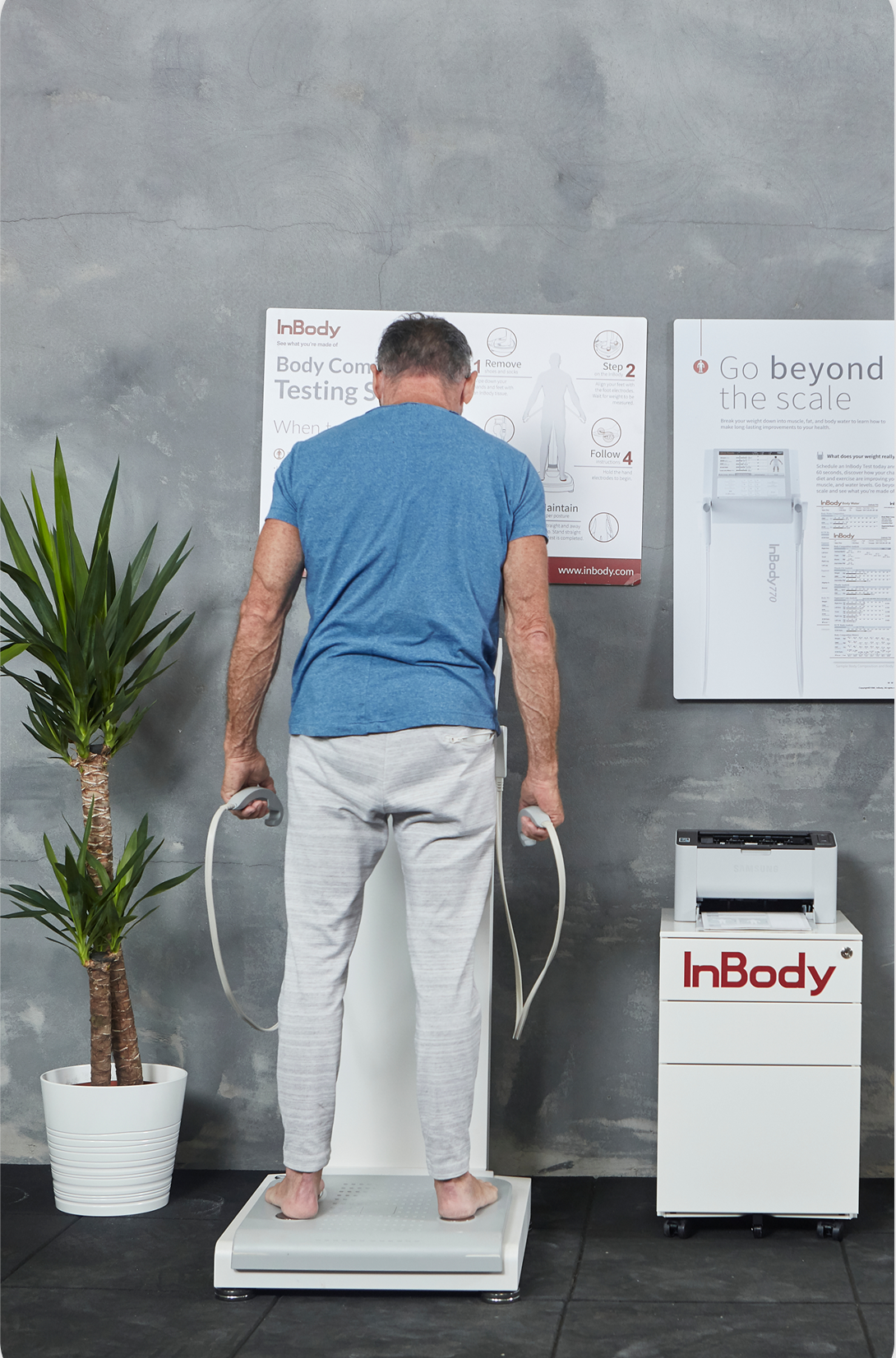
Was ist bioelektrische Impedanzanalyse (BIA)?
Hinter den Kulissen
Was ist bioelektrische Impedanzanalyse (BIA)?
Hinter den Kulissen
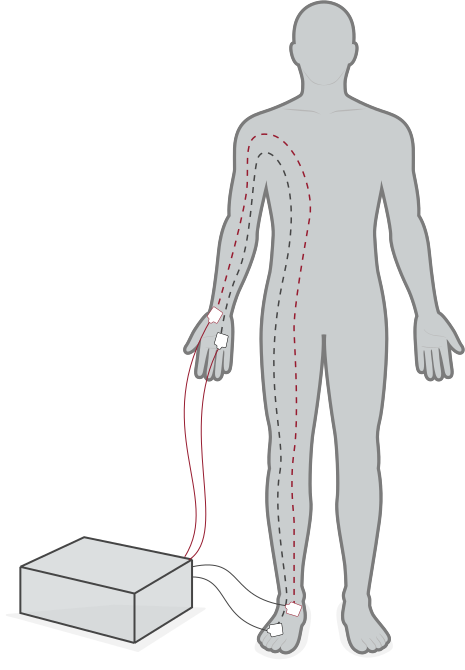
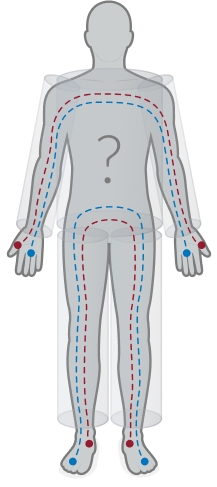
Die bioelektrische Impedanzanalyse (BIA) misst Impedanz, indem schwache Wechselströme durch den menschlichen corpo geleitet werden.
Das Prinzip des Widerstands lässt sich mit Verkehr vergleichen: Je freier der Weg, desto leichter fließt der Strom. acqua corporea leitet Strom gut, während Fettgewebe einen höheren Widerstand aufweist. Aus diesen Messwerten kann die corpozusammensetzung abgeleitet werden.


Putting It All Together
InBody timeline

1969
Hoffer and the Impedance Index
In 1969, Hoffer carried out a series of experiments to prove that total body water and biological impedance were highly correlated, suggesting that impedance measurement could be used for determining total body water.
He showed the squared value of height divided by impedance was highly correlated with total body water.
Hoffer took impedance measurements of the right half of the body including the right arm, torso, and right leg.
The squared value divided by impedance showed correlation coefficient of 0.92 with total body water, which was higher than other indices including body weight. The equation Hoffer proved is the impedance index used in BIA today.

1969
Hoffer and the Impedance Index
In 1969, Hoffer carried out a series of experiments to prove that total body water and biological impedance were highly correlated, suggesting that impedance measurement could be used for determining total body water.
He showed the squared value of height divided by impedance was highly correlated with total body water.
Hoffer took impedance measurements of the right half of the body including the right arm, torso, and right leg.
The squared value divided by impedance showed correlation coefficient of 0.92 with total body water, which was higher than other indices including body weight. The equation Hoffer proved is the impedance index used in BIA today.
This is a sample timeline content. To increase the accuracy of the results, researchers came up with empirical equations that utilized empirical data such as gender and age to calculate a person’s body composition. Empirical data is knowledge acquired by means of observation or experimentation. By collecting data on a sample population that (hopefully) represents the variance of the entire population, researchers attempt to derive trends that may be used to predict outcomes. In body composition, researchers identify these trends in muscle and fat mass; they use this data to predict body composition based on specific variables (age, gender, ethnicity, etc.)
In 1986, Lukaski used the published equations using impedance index, body weight and reactance; and in 1986, Kushner published equations using the impedance index, body weight and gender. Although empirical estimations could give you an accurate estimate of a general user’s body composition, there are significant problems when they are used for medical purposes. Let’s suppose that there is a device that uses an empirical equation to calculate total body water. And there are two people who have same amount of lean body mass, but one person is 30 years old, and the other one is 40 years old.
Even though they have the same amount of lean body mass, the empirical equations will calculate that these two people will have 0.8 L difference in total body water only because of the age, which is neither fair nor accurate.
1976
RJL Systems and the first impedance meter
In 1979, RJL Systems commercialized the impedance meter for the first time and the BIA method began to gain popularity.
The device measured impedance by attaching electrodes on the back of the right hand and a top of the right foot of a patient and conducting a current of 50kHz through the right half of the body.
Prior to this, body composition could only be measured by caliper or underwater weighing. Such methods needed to be carried out by skilled people and installation was not easy. Also, only specific types of patients could benefit from them.
BIA however, was easy, fast, less expensive and less intrusive. Therefore, many body composition researchers, nutritionists, and medical experts began to use BIA.
1976
RJL Systems and the first impedance meter
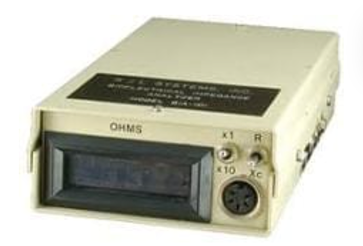
In 1979, RJL Systems commercialized the impedance meter for the first time and the BIA method began to gain popularity.
The device measured impedance by attaching electrodes on the back of the right hand and a top of the right foot of a patient and conducting a current of 50kHz through the right half of the body.
Prior to this, body composition could only be measured by caliper or underwater weighing. Such methods needed to be carried out by skilled people and installation was not easy. Also, only specific types of patients could benefit from them.
BIA however, was easy, fast, less expensive and less intrusive. Therefore, many body composition researchers, nutritionists, and medical experts began to use BIA.
This is a sample timeline content. To increase the accuracy of the results, researchers came up with empirical equations that utilized empirical data such as gender and age to calculate a person’s body composition. Empirical data is knowledge acquired by means of observation or experimentation. By collecting data on a sample population that (hopefully) represents the variance of the entire population, researchers attempt to derive trends that may be used to predict outcomes. In body composition, researchers identify these trends in muscle and fat mass; they use this data to predict body composition based on specific variables (age, gender, ethnicity, etc.)
In 1986, Lukaski used the published equations using impedance index, body weight and reactance; and in 1986, Kushner published equations using the impedance index, body weight and gender. Although empirical estimations could give you an accurate estimate of a general user’s body composition, there are significant problems when they are used for medical purposes. Let’s suppose that there is a device that uses an empirical equation to calculate total body water. And there are two people who have same amount of lean body mass, but one person is 30 years old, and the other one is 40 years old.
Even though they have the same amount of lean body mass, the empirical equations will calculate that these two people will have 0.8 L difference in total body water only because of the age, which is neither fair nor accurate.
1980
Discovering limitations to BIA with empirical data
Research by Lukaski, Segal and other scholars accelerated the evolution of BIA. Studies proved BIA had high correlation with gold standard methods like underwater weighing and DEXA. But technical limitations of BIA began to surface in the late 1980s.
One limitation was that BIA assumed the human body to be in the shape of one cylinder and used a single frequency (50 kHz).
This may have worked for patients with standard body types, but it wasn’t as accurate for other populations.
So, researchers came up with various equations in addition to the impedance index so as to complement the technical limitation of BIA and achieve greater accuracy for patient groups of different age, gender etc.
1980
Discovering limitations to BIA with empirical data
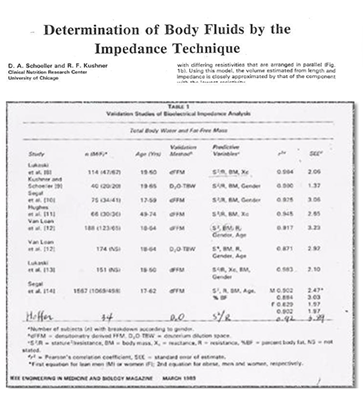
Research by Lukaski, Segal and other scholars accelerated the evolution of BIA. Studies proved BIA had high correlation with gold standard methods like underwater weighing and DEXA. But technical limitations of BIA began to surface in the late 1980s.
One limitation was that BIA assumed the human body to be in the shape of one cylinder and used a single frequency (50 kHz).
This may have worked for patients with standard body types, but it wasn’t as accurate for other populations.
So, researchers came up with various equations in addition to the impedance index so as to complement the technical limitation of BIA and achieve greater accuracy for patient groups of different age, gender etc.
This is a sample timeline content. To increase the accuracy of the results, researchers came up with empirical equations that utilized empirical data such as gender and age to calculate a person’s body composition. Empirical data is knowledge acquired by means of observation or experimentation. By collecting data on a sample population that (hopefully) represents the variance of the entire population, researchers attempt to derive trends that may be used to predict outcomes. In body composition, researchers identify these trends in muscle and fat mass; they use this data to predict body composition based on specific variables (age, gender, ethnicity, etc.)
In 1986, Lukaski used the published equations using impedance index, body weight and reactance; and in 1986, Kushner published equations using the impedance index, body weight and gender. Although empirical estimations could give you an accurate estimate of a general user’s body composition, there are significant problems when they are used for medical purposes. Let’s suppose that there is a device that uses an empirical equation to calculate total body water. And there are two people who have same amount of lean body mass, but one person is 30 years old, and the other one is 40 years old.
Even though they have the same amount of lean body mass, the empirical equations will calculate that these two people will have 0.8 L difference in total body water only because of the age, which is neither fair nor accurate.
1980
Lukaski and Kushner develop empirical equations
To increase the accuracy of the results, researchers came up with empirical equations that utilized empirical data such as gender and age to calculate a person’s body composition. Empirical data is knowledge acquired by means of observation or experimentation. By collecting data on a sample population that (hopefully) represents the variance of the entire population, researchers attempt to derive trends that may be used to predict outcomes. In body composition, researchers identify these trends in muscle and fat mass; they use this data to predict body composition based on specific variables (age, gender, ethnicity, etc.)
In 1986, Lukaski used the published equations using impedance index, body weight and reactance; and in 1986, Kushner published equations using the impedance index, body weight and gender. Although empirical estimations could give you an accurate estimate of a general user’s body composition, there are significant problems when they are used for medical purposes. Let’s suppose that there is a device that uses an empirical equation to calculate total body water. And there are two people who have same amount of lean body mass, but one person is 30 years old, and the other one is 40 years old.
Even though they have the same amount of lean body mass, the empirical equations will calculate that these two people will have 0.8 L difference in total body water only because of the age, which is neither fair nor accurate.
1980
Lukaski and Kushner develop empirical equations
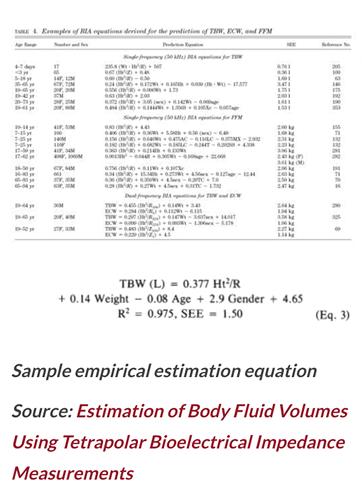
To increase the accuracy of the results, researchers came up with empirical equations that utilized empirical data such as gender and age to calculate a person’s body composition. Empirical data is knowledge acquired by means of observation or experimentation. By collecting data on a sample population that (hopefully) represents the variance of the entire population, researchers attempt to derive trends that may be used to predict outcomes. In body composition, researchers identify these trends in muscle and fat mass; they use this data to predict body composition based on specific variables (age, gender, ethnicity, etc.)
In 1986, Lukaski used the published equations using impedance index, body weight and reactance; and in 1986, Kushner published equations using the impedance index, body weight and gender. Although empirical estimations could give you an accurate estimate of a general user’s body composition, there are significant problems when they are used for medical purposes. Let’s suppose that there is a device that uses an empirical equation to calculate total body water. And there are two people who have same amount of lean body mass, but one person is 30 years old, and the other one is 40 years old.
Even though they have the same amount of lean body mass, the empirical equations will calculate that these two people will have 0.8 L difference in total body water only because of the age, which is neither fair nor accurate.
This is a sample timeline content. To increase the accuracy of the results, researchers came up with empirical equations that utilized empirical data such as gender and age to calculate a person’s body composition. Empirical data is knowledge acquired by means of observation or experimentation. By collecting data on a sample population that (hopefully) represents the variance of the entire population, researchers attempt to derive trends that may be used to predict outcomes. In body composition, researchers identify these trends in muscle and fat mass; they use this data to predict body composition based on specific variables (age, gender, ethnicity, etc.)
In 1986, Lukaski used the published equations using impedance index, body weight and reactance; and in 1986, Kushner published equations using the impedance index, body weight and gender. Although empirical estimations could give you an accurate estimate of a general user’s body composition, there are significant problems when they are used for medical purposes. Let’s suppose that there is a device that uses an empirical equation to calculate total body water. And there are two people who have same amount of lean body mass, but one person is 30 years old, and the other one is 40 years old.
Even though they have the same amount of lean body mass, the empirical equations will calculate that these two people will have 0.8 L difference in total body water only because of the age, which is neither fair nor accurate.
1980
Discovering limitions to BIA with empirical data
Research by Lukaski, Segal and other scholars accelerated the evolution of BIA.
Studies proved BIA had high correlation with gold standard methods like underwater weighing and DEXA. But technical limitations of BIA began to surface in the late 1980s.
One limitation was that BIA assumed the human body to be in the shape of one cylinder and used a single frequency (50 kHz).
This may have worked for patients with standard body types, but it wasn’t as accurate for other populations.
So, researchers came up with various equations in addition to the impedance index so as to complement the technical limitation of BIA and achieve greater accuracy for patient groups of different age, gender etc.
1980
Discovering limitions to BIA with empirical data
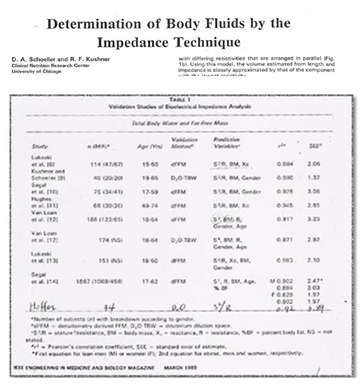
Research by Lukaski, Segal and other scholars accelerated the evolution of BIA.
Studies proved BIA had high correlation with gold standard methods like underwater weighing and DEXA. But technical limitations of BIA began to surface in the late 1980s.
One limitation was that BIA assumed the human body to be in the shape of one cylinder and used a single frequency (50 kHz).
This may have worked for patients with standard body types, but it wasn’t as accurate for other populations.
So, researchers came up with various equations in addition to the impedance index so as to complement the technical limitation of BIA and achieve greater accuracy for patient groups of different age, gender etc.
This is a sample timeline content. To increase the accuracy of the results, researchers came up with empirical equations that utilized empirical data such as gender and age to calculate a person’s body composition. Empirical data is knowledge acquired by means of observation or experimentation. By collecting data on a sample population that (hopefully) represents the variance of the entire population, researchers attempt to derive trends that may be used to predict outcomes. In body composition, researchers identify these trends in muscle and fat mass; they use this data to predict body composition based on specific variables (age, gender, ethnicity, etc.)
In 1986, Lukaski used the published equations using impedance index, body weight and reactance; and in 1986, Kushner published equations using the impedance index, body weight and gender. Although empirical estimations could give you an accurate estimate of a general user’s body composition, there are significant problems when they are used for medical purposes. Let’s suppose that there is a device that uses an empirical equation to calculate total body water. And there are two people who have same amount of lean body mass, but one person is 30 years old, and the other one is 40 years old.
Even though they have the same amount of lean body mass, the empirical equations will calculate that these two people will have 0.8 L difference in total body water only because of the age, which is neither fair nor accurate.
1980
Home-use BIA Devices
Due to technological constraints, BIA devices became home-use devices rather than hospital devices.
In the late 1980s, Japanese manufacturers released various types of BIA-based body composition devices that could easily be used by the general public.
Some devices measured the impedance between two feet as the user stands on the scale, while another would measure the impedance between two hands while holding the device.
1980
Home-use BIA Devices
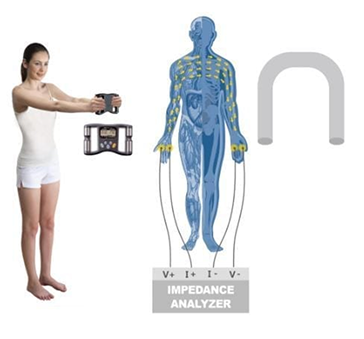
Due to technological constraints, BIA devices became home-use devices rather than hospital devices.
In the late 1980s, Japanese manufacturers released various types of BIA-based body composition devices that could easily be used by the general public.
Some devices measured the impedance between two feet as the user stands on the scale, while another would measure the impedance between two hands while holding the device.
This is a sample timeline content. To increase the accuracy of the results, researchers came up with empirical equations that utilized empirical data such as gender and age to calculate a person’s body composition. Empirical data is knowledge acquired by means of observation or experimentation. By collecting data on a sample population that (hopefully) represents the variance of the entire population, researchers attempt to derive trends that may be used to predict outcomes. In body composition, researchers identify these trends in muscle and fat mass; they use this data to predict body composition based on specific variables (age, gender, ethnicity, etc.)
In 1986, Lukaski used the published equations using impedance index, body weight and reactance; and in 1986, Kushner published equations using the impedance index, body weight and gender. Although empirical estimations could give you an accurate estimate of a general user’s body composition, there are significant problems when they are used for medical purposes. Let’s suppose that there is a device that uses an empirical equation to calculate total body water. And there are two people who have same amount of lean body mass, but one person is 30 years old, and the other one is 40 years old.
Even though they have the same amount of lean body mass, the empirical equations will calculate that these two people will have 0.8 L difference in total body water only because of the age, which is neither fair nor accurate.
1992
The History of BIA Technology
Since the inaccuracy of BIA is due to technical limitations, many argued that this could be improved upon. In 1992, Kushner claimed that the human body is made up of five cylinders (right arm, left arm, torso, right leg, left leg) instead of one.
While the thin limbs affect the total impedance, the torso, which has the largest cross-sectional area, has little impact on impedance. However, since the torso makes up 50% of lean body mass, Kushner emphasized that measuring the impedance of the body torso separately would be very important.
Measuring the total impedance alone would not be sufficient but all five parts must be measured separately at different frequencies, making a distinction between extracellular water and intracellular water.
In other words, the technical limitations of BIA should be overcome by measuring different parts at different frequencies.
1992
The History of BIA Technology
Since the inaccuracy of BIA is due to technical limitations, many argued that this could be improved upon. In 1992, Kushner claimed that the human body is made up of five cylinders (right arm, left arm, torso, right leg, left leg) instead of one.
While the thin limbs affect the total impedance, the torso, which has the largest cross-sectional area, has little impact on impedance. However, since the torso makes up 50% of lean body mass, Kushner emphasized that measuring the impedance of the body torso separately would be very important.
Measuring the total impedance alone would not be sufficient but all five parts must be measured separately at different frequencies, making a distinction between extracellular water and intracellular water.
In other words, the technical limitations of BIA should be overcome by measuring different parts at different frequencies.
This is a sample timeline content. To increase the accuracy of the results, researchers came up with empirical equations that utilized empirical data such as gender and age to calculate a person’s body composition. Empirical data is knowledge acquired by means of observation or experimentation. By collecting data on a sample population that (hopefully) represents the variance of the entire population, researchers attempt to derive trends that may be used to predict outcomes. In body composition, researchers identify these trends in muscle and fat mass; they use this data to predict body composition based on specific variables (age, gender, ethnicity, etc.)
In 1986, Lukaski used the published equations using impedance index, body weight and reactance; and in 1986, Kushner published equations using the impedance index, body weight and gender. Although empirical estimations could give you an accurate estimate of a general user’s body composition, there are significant problems when they are used for medical purposes. Let’s suppose that there is a device that uses an empirical equation to calculate total body water. And there are two people who have same amount of lean body mass, but one person is 30 years old, and the other one is 40 years old.
Even though they have the same amount of lean body mass, the empirical equations will calculate that these two people will have 0.8 L difference in total body water only because of the age, which is neither fair nor accurate.
1996
Dr. Cha creates the InBody body composition analyzer
In 1996, Dr. Kichul Cha, a bioengineering major at Harvard Medicalee School, developed the world’s first 8-point tactile electrode system with direct segmental analysis which measures impedance for the five different parts of the body at multiple frequencies.
Measuring impedance by applying currents of multi-frequencies on the five parts of the body took a separate impedance measurement. Moreover, it allows separately checking torso impedance. This yielded highly accurate results without using empirical data. Thus, InBody body composition analyzers became a precise medical device. Impedance values for all cylinders, including the torso, can be found on the InBody Foglio dei risultati.
Many BIA products today provide muscle mass for each section of the body. However, most of such products are unable to take sectional impedance measurements, especially the torso impedance.
However, as shown on an InBody Foglio dei risultati, you can see the impedance values of all five parts of the body including the torso with the use of both high and low frequencies.
1996
Dr. Cha creates the InBody body composition analyzer
In 1996, Dr. Kichul Cha, a bioengineering major at Harvard Medicalee School, developed the world’s first 8-point tactile electrode system with direct segmental analysis which measures impedance for the five different parts of the body at multiple frequencies.
Measuring impedance by applying currents of multi-frequencies on the five parts of the body took a separate impedance measurement. Moreover, it allows separately checking torso impedance. This yielded highly accurate results without using empirical data. Thus, InBody body composition analyzers became a precise medical device. Impedance values for all cylinders, including the torso, can be found on the InBody Foglio dei risultati.
Many BIA products today provide muscle mass for each section of the body. However, most of such products are unable to take sectional impedance measurements, especially the torso impedance.
However, as shown on an InBody Foglio dei risultati, you can see the impedance values of all five parts of the body including the torso with the use of both high and low frequencies.
This is a sample timeline content. To increase the accuracy of the results, researchers came up with empirical equations that utilized empirical data such as gender and age to calculate a person’s body composition. Empirical data is knowledge acquired by means of observation or experimentation. By collecting data on a sample population that (hopefully) represents the variance of the entire population, researchers attempt to derive trends that may be used to predict outcomes. In body composition, researchers identify these trends in muscle and fat mass; they use this data to predict body composition based on specific variables (age, gender, ethnicity, etc.)
In 1986, Lukaski used the published equations using impedance index, body weight and reactance; and in 1986, Kushner published equations using the impedance index, body weight and gender. Although empirical estimations could give you an accurate estimate of a general user’s body composition, there are significant problems when they are used for medical purposes. Let’s suppose that there is a device that uses an empirical equation to calculate total body water. And there are two people who have same amount of lean body mass, but one person is 30 years old, and the other one is 40 years old.
Even though they have the same amount of lean body mass, the empirical equations will calculate that these two people will have 0.8 L difference in total body water only because of the age, which is neither fair nor accurate.
1969
Hoffer and the Impedance Index
In 1969, Hoffer carried out a series of experiments to prove that total body water and biological impedance were highly correlated, suggesting that impedance measurement could be used for determining total body water.
He showed the squared value of height divided by impedance was highly correlated with total body water.
Hoffer took impedance measurements of the right half of the body including the right arm, torso, and right leg.
The squared value divided by impedance showed correlation coefficient of 0.92 with total body water, which was higher than other indices including body weight. The equation Hoffer proved is the impedance index used in BIA today.
1969
Hoffer and the Impedance Index
In 1969, Hoffer carried out a series of experiments to prove that total body water and biological impedance were highly correlated, suggesting that impedance measurement could be used for determining total body water.
He showed the squared value of height divided by impedance was highly correlated with total body water.
Hoffer took impedance measurements of the right half of the body including the right arm, torso, and right leg.
The squared value divided by impedance showed correlation coefficient of 0.92 with total body water, which was higher than other indices including body weight. The equation Hoffer proved is the impedance index used in BIA today.
This is a sample timeline content. To increase the accuracy of the results, researchers came up with empirical equations that utilized empirical data such as gender and age to calculate a person’s body composition. Empirical data is knowledge acquired by means of observation or experimentation. By collecting data on a sample population that (hopefully) represents the variance of the entire population, researchers attempt to derive trends that may be used to predict outcomes. In body composition, researchers identify these trends in muscle and fat mass; they use this data to predict body composition based on specific variables (age, gender, ethnicity, etc.)
In 1986, Lukaski used the published equations using impedance index, body weight and reactance; and in 1986, Kushner published equations using the impedance index, body weight and gender. Although empirical estimations could give you an accurate estimate of a general user’s body composition, there are significant problems when they are used for medical purposes. Let’s suppose that there is a device that uses an empirical equation to calculate total body water. And there are two people who have same amount of lean body mass, but one person is 30 years old, and the other one is 40 years old.
Even though they have the same amount of lean body mass, the empirical equations will calculate that these two people will have 0.8 L difference in total body water only because of the age, which is neither fair nor accurate.
1976
RJL Systems and the first impedance meter
In 1979, RJL Systems commercialized the impedance meter for the first time and the BIA method began to gain popularity.
The device measured impedance by attaching electrodes on the back of the right hand and a top of the right foot of a patient and conducting a current of 50kHz through the right half of the body.
Prior to this, body composition could only be measured by caliper or underwater weighing. Such methods needed to be carried out by skilled people and installation was not easy. Also, only specific types of patients could benefit from them.
BIA however, was easy, fast, less expensive and less intrusive. Therefore, many body composition researchers, nutritionists, and medical experts began to use BIA.
1976
RJL Systems and the first impedance meter
In 1979, RJL Systems commercialized the impedance meter for the first time and the BIA method began to gain popularity.
The device measured impedance by attaching electrodes on the back of the right hand and a top of the right foot of a patient and conducting a current of 50kHz through the right half of the body.
Prior to this, body composition could only be measured by caliper or underwater weighing. Such methods needed to be carried out by skilled people and installation was not easy. Also, only specific types of patients could benefit from them.
BIA however, was easy, fast, less expensive and less intrusive. Therefore, many body composition researchers, nutritionists, and medical experts began to use BIA.
This is a sample timeline content. To increase the accuracy of the results, researchers came up with empirical equations that utilized empirical data such as gender and age to calculate a person’s body composition. Empirical data is knowledge acquired by means of observation or experimentation. By collecting data on a sample population that (hopefully) represents the variance of the entire population, researchers attempt to derive trends that may be used to predict outcomes. In body composition, researchers identify these trends in muscle and fat mass; they use this data to predict body composition based on specific variables (age, gender, ethnicity, etc.)
In 1986, Lukaski used the published equations using impedance index, body weight and reactance; and in 1986, Kushner published equations using the impedance index, body weight and gender. Although empirical estimations could give you an accurate estimate of a general user’s body composition, there are significant problems when they are used for medical purposes. Let’s suppose that there is a device that uses an empirical equation to calculate total body water. And there are two people who have same amount of lean body mass, but one person is 30 years old, and the other one is 40 years old.
Even though they have the same amount of lean body mass, the empirical equations will calculate that these two people will have 0.8 L difference in total body water only because of the age, which is neither fair nor accurate.
1980
Discovering limitations to BIA with empirical data
Research by Lukaski, Segal and other scholars accelerated the evolution of BIA. Studies proved BIA had high correlation with gold standard methods like underwater weighing and DEXA. But technical limitations of BIA began to surface in the late 1980s.
One limitation was that BIA assumed the human body to be in the shape of one cylinder and used a single frequency (50 kHz).
This may have worked for patients with standard body types, but it wasn’t as accurate for other populations.
So, researchers came up with various equations in addition to the impedance index so as to complement the technical limitation of BIA and achieve greater accuracy for patient groups of different age, gender etc.
1980
Discovering limitations to BIA with empirical data
Research by Lukaski, Segal and other scholars accelerated the evolution of BIA. Studies proved BIA had high correlation with gold standard methods like underwater weighing and DEXA. But technical limitations of BIA began to surface in the late 1980s.
One limitation was that BIA assumed the human body to be in the shape of one cylinder and used a single frequency (50 kHz).
This may have worked for patients with standard body types, but it wasn’t as accurate for other populations.
So, researchers came up with various equations in addition to the impedance index so as to complement the technical limitation of BIA and achieve greater accuracy for patient groups of different age, gender etc.
This is a sample timeline content. To increase the accuracy of the results, researchers came up with empirical equations that utilized empirical data such as gender and age to calculate a person’s body composition. Empirical data is knowledge acquired by means of observation or experimentation. By collecting data on a sample population that (hopefully) represents the variance of the entire population, researchers attempt to derive trends that may be used to predict outcomes. In body composition, researchers identify these trends in muscle and fat mass; they use this data to predict body composition based on specific variables (age, gender, ethnicity, etc.)
In 1986, Lukaski used the published equations using impedance index, body weight and reactance; and in 1986, Kushner published equations using the impedance index, body weight and gender. Although empirical estimations could give you an accurate estimate of a general user’s body composition, there are significant problems when they are used for medical purposes. Let’s suppose that there is a device that uses an empirical equation to calculate total body water. And there are two people who have same amount of lean body mass, but one person is 30 years old, and the other one is 40 years old.
Even though they have the same amount of lean body mass, the empirical equations will calculate that these two people will have 0.8 L difference in total body water only because of the age, which is neither fair nor accurate.
1980
Lukaski and Kushner develop empirical equations
To increase the accuracy of the results, researchers came up with empirical equations that utilized empirical data such as gender and age to calculate a person’s body composition. Empirical data is knowledge acquired by means of observation or experimentation. By collecting data on a sample population that (hopefully) represents the variance of the entire population, researchers attempt to derive trends that may be used to predict outcomes. In body composition, researchers identify these trends in muscle and fat mass; they use this data to predict body composition based on specific variables (age, gender, ethnicity, etc.)
In 1986, Lukaski used the published equations using impedance index, body weight and reactance; and in 1986, Kushner published equations using the impedance index, body weight and gender. Although empirical estimations could give you an accurate estimate of a general user’s body composition, there are significant problems when they are used for medical purposes. Let’s suppose that there is a device that uses an empirical equation to calculate total body water. And there are two people who have same amount of lean body mass, but one person is 30 years old, and the other one is 40 years old.
Even though they have the same amount of lean body mass, the empirical equations will calculate that these two people will have 0.8 L difference in total body water only because of the age, which is neither fair nor accurate.
1980
Lukaski and Kushner develop empirical equations
To increase the accuracy of the results, researchers came up with empirical equations that utilized empirical data such as gender and age to calculate a person’s body composition. Empirical data is knowledge acquired by means of observation or experimentation. By collecting data on a sample population that (hopefully) represents the variance of the entire population, researchers attempt to derive trends that may be used to predict outcomes. In body composition, researchers identify these trends in muscle and fat mass; they use this data to predict body composition based on specific variables (age, gender, ethnicity, etc.)
In 1986, Lukaski used the published equations using impedance index, body weight and reactance; and in 1986, Kushner published equations using the impedance index, body weight and gender. Although empirical estimations could give you an accurate estimate of a general user’s body composition, there are significant problems when they are used for medical purposes. Let’s suppose that there is a device that uses an empirical equation to calculate total body water. And there are two people who have same amount of lean body mass, but one person is 30 years old, and the other one is 40 years old.
Even though they have the same amount of lean body mass, the empirical equations will calculate that these two people will have 0.8 L difference in total body water only because of the age, which is neither fair nor accurate.
This is a sample timeline content. To increase the accuracy of the results, researchers came up with empirical equations that utilized empirical data such as gender and age to calculate a person’s body composition. Empirical data is knowledge acquired by means of observation or experimentation. By collecting data on a sample population that (hopefully) represents the variance of the entire population, researchers attempt to derive trends that may be used to predict outcomes. In body composition, researchers identify these trends in muscle and fat mass; they use this data to predict body composition based on specific variables (age, gender, ethnicity, etc.)
In 1986, Lukaski used the published equations using impedance index, body weight and reactance; and in 1986, Kushner published equations using the impedance index, body weight and gender. Although empirical estimations could give you an accurate estimate of a general user’s body composition, there are significant problems when they are used for medical purposes. Let’s suppose that there is a device that uses an empirical equation to calculate total body water. And there are two people who have same amount of lean body mass, but one person is 30 years old, and the other one is 40 years old.
Even though they have the same amount of lean body mass, the empirical equations will calculate that these two people will have 0.8 L difference in total body water only because of the age, which is neither fair nor accurate.
1980
Discovering limitions to BIA with empirical data
Research by Lukaski, Segal and other scholars accelerated the evolution of BIA.
Studies proved BIA had high correlation with gold standard methods like underwater weighing and DEXA. But technical limitations of BIA began to surface in the late 1980s.
One limitation was that BIA assumed the human body to be in the shape of one cylinder and used a single frequency (50 kHz).
This may have worked for patients with standard body types, but it wasn’t as accurate for other populations.
So, researchers came up with various equations in addition to the impedance index so as to complement the technical limitation of BIA and achieve greater accuracy for patient groups of different age, gender etc.
1980
Discovering limitions to BIA with empirical data
Research by Lukaski, Segal and other scholars accelerated the evolution of BIA.
Studies proved BIA had high correlation with gold standard methods like underwater weighing and DEXA. But technical limitations of BIA began to surface in the late 1980s.
One limitation was that BIA assumed the human body to be in the shape of one cylinder and used a single frequency (50 kHz).
This may have worked for patients with standard body types, but it wasn’t as accurate for other populations.
So, researchers came up with various equations in addition to the impedance index so as to complement the technical limitation of BIA and achieve greater accuracy for patient groups of different age, gender etc.
This is a sample timeline content. To increase the accuracy of the results, researchers came up with empirical equations that utilized empirical data such as gender and age to calculate a person’s body composition. Empirical data is knowledge acquired by means of observation or experimentation. By collecting data on a sample population that (hopefully) represents the variance of the entire population, researchers attempt to derive trends that may be used to predict outcomes. In body composition, researchers identify these trends in muscle and fat mass; they use this data to predict body composition based on specific variables (age, gender, ethnicity, etc.)
In 1986, Lukaski used the published equations using impedance index, body weight and reactance; and in 1986, Kushner published equations using the impedance index, body weight and gender. Although empirical estimations could give you an accurate estimate of a general user’s body composition, there are significant problems when they are used for medical purposes. Let’s suppose that there is a device that uses an empirical equation to calculate total body water. And there are two people who have same amount of lean body mass, but one person is 30 years old, and the other one is 40 years old.
Even though they have the same amount of lean body mass, the empirical equations will calculate that these two people will have 0.8 L difference in total body water only because of the age, which is neither fair nor accurate.
1980
Home-use BIA Devices
Due to technological constraints, BIA devices became home-use devices rather than hospital devices.
In the late 1980s, Japanese manufacturers released various types of BIA-based body composition devices that could easily be used by the general public.
Some devices measured the impedance between two feet as the user stands on the scale, while another would measure the impedance between two hands while holding the device.
1980
Home-use BIA Devices
Due to technological constraints, BIA devices became home-use devices rather than hospital devices.
In the late 1980s, Japanese manufacturers released various types of BIA-based body composition devices that could easily be used by the general public.
Some devices measured the impedance between two feet as the user stands on the scale, while another would measure the impedance between two hands while holding the device.
This is a sample timeline content. To increase the accuracy of the results, researchers came up with empirical equations that utilized empirical data such as gender and age to calculate a person’s body composition. Empirical data is knowledge acquired by means of observation or experimentation. By collecting data on a sample population that (hopefully) represents the variance of the entire population, researchers attempt to derive trends that may be used to predict outcomes. In body composition, researchers identify these trends in muscle and fat mass; they use this data to predict body composition based on specific variables (age, gender, ethnicity, etc.)
In 1986, Lukaski used the published equations using impedance index, body weight and reactance; and in 1986, Kushner published equations using the impedance index, body weight and gender. Although empirical estimations could give you an accurate estimate of a general user’s body composition, there are significant problems when they are used for medical purposes. Let’s suppose that there is a device that uses an empirical equation to calculate total body water. And there are two people who have same amount of lean body mass, but one person is 30 years old, and the other one is 40 years old.
Even though they have the same amount of lean body mass, the empirical equations will calculate that these two people will have 0.8 L difference in total body water only because of the age, which is neither fair nor accurate.
1992
The History of BIA Technology
Since the inaccuracy of BIA is due to technical limitations, many argued that this could be improved upon. In 1992, Kushner claimed that the human body is made up of five cylinders (right arm, left arm, torso, right leg, left leg) instead of one.
While the thin limbs affect the total impedance, the torso, which has the largest cross-sectional area, has little impact on impedance. However, since the torso makes up 50% of lean body mass, Kushner emphasized that measuring the impedance of the body torso separately would be very important.
Measuring the total impedance alone would not be sufficient but all five parts must be measured separately at different frequencies, making a distinction between extracellular water and intracellular water.
In other words, the technical limitations of BIA should be overcome by measuring different parts at different frequencies.
1992
The History of BIA Technology
Since the inaccuracy of BIA is due to technical limitations, many argued that this could be improved upon. In 1992, Kushner claimed that the human body is made up of five cylinders (right arm, left arm, torso, right leg, left leg) instead of one.
While the thin limbs affect the total impedance, the torso, which has the largest cross-sectional area, has little impact on impedance. However, since the torso makes up 50% of lean body mass, Kushner emphasized that measuring the impedance of the body torso separately would be very important.
Measuring the total impedance alone would not be sufficient but all five parts must be measured separately at different frequencies, making a distinction between extracellular water and intracellular water.
In other words, the technical limitations of BIA should be overcome by measuring different parts at different frequencies.
This is a sample timeline content. To increase the accuracy of the results, researchers came up with empirical equations that utilized empirical data such as gender and age to calculate a person’s body composition. Empirical data is knowledge acquired by means of observation or experimentation. By collecting data on a sample population that (hopefully) represents the variance of the entire population, researchers attempt to derive trends that may be used to predict outcomes. In body composition, researchers identify these trends in muscle and fat mass; they use this data to predict body composition based on specific variables (age, gender, ethnicity, etc.)
In 1986, Lukaski used the published equations using impedance index, body weight and reactance; and in 1986, Kushner published equations using the impedance index, body weight and gender. Although empirical estimations could give you an accurate estimate of a general user’s body composition, there are significant problems when they are used for medical purposes. Let’s suppose that there is a device that uses an empirical equation to calculate total body water. And there are two people who have same amount of lean body mass, but one person is 30 years old, and the other one is 40 years old.
Even though they have the same amount of lean body mass, the empirical equations will calculate that these two people will have 0.8 L difference in total body water only because of the age, which is neither fair nor accurate.
1996
Dr. Cha creates the InBody body composition analyzer
In 1996, Dr. Kichul Cha, a bioengineering major at Harvard Medicalee School, developed the world’s first 8-point tactile electrode system with direct segmental analysis which measures impedance for the five different parts of the body at multiple frequencies.
Measuring impedance by applying currents of multi-frequencies on the five parts of the body took a separate impedance measurement. Moreover, it allows separately checking torso impedance. This yielded highly accurate results without using empirical data. Thus, InBody body composition analyzers became a precise medical device. Impedance values for all cylinders, including the torso, can be found on the InBody Foglio dei risultati.
Many BIA products today provide muscle mass for each section of the body. However, most of such products are unable to take sectional impedance measurements, especially the torso impedance.
However, as shown on an InBody Foglio dei risultati, you can see the impedance values of all five parts of the body including the torso with the use of both high and low frequencies.
1996
Dr. Cha creates the InBody body composition analyzer
In 1996, Dr. Kichul Cha, a bioengineering major at Harvard Medicalee School, developed the world’s first 8-point tactile electrode system with direct segmental analysis which measures impedance for the five different parts of the body at multiple frequencies.
Measuring impedance by applying currents of multi-frequencies on the five parts of the body took a separate impedance measurement. Moreover, it allows separately checking torso impedance. This yielded highly accurate results without using empirical data. Thus, InBody body composition analyzers became a precise medical device. Impedance values for all cylinders, including the torso, can be found on the InBody Foglio dei risultati.
Many BIA products today provide muscle mass for each section of the body. However, most of such products are unable to take sectional impedance measurements, especially the torso impedance.
However, as shown on an InBody Foglio dei risultati, you can see the impedance values of all five parts of the body including the torso with the use of both high and low frequencies.
This is a sample timeline content. To increase the accuracy of the results, researchers came up with empirical equations that utilized empirical data such as gender and age to calculate a person’s body composition. Empirical data is knowledge acquired by means of observation or experimentation. By collecting data on a sample population that (hopefully) represents the variance of the entire population, researchers attempt to derive trends that may be used to predict outcomes. In body composition, researchers identify these trends in muscle and fat mass; they use this data to predict body composition based on specific variables (age, gender, ethnicity, etc.)
In 1986, Lukaski used the published equations using impedance index, body weight and reactance; and in 1986, Kushner published equations using the impedance index, body weight and gender. Although empirical estimations could give you an accurate estimate of a general user’s body composition, there are significant problems when they are used for medical purposes. Let’s suppose that there is a device that uses an empirical equation to calculate total body water. And there are two people who have same amount of lean body mass, but one person is 30 years old, and the other one is 40 years old.
Even though they have the same amount of lean body mass, the empirical equations will calculate that these two people will have 0.8 L difference in total body water only because of the age, which is neither fair nor accurate.
InBody timeline
1969
Hoffer and the Impedance Index
In 1969, Hoffer carried out a series of experiments to prove that total body water and biological impedance were highly correlated, suggesting that impedance measurement could be used for determining total body water.
He showed the squared value of height divided by impedance was highly correlated with total body water.
Hoffer took impedance measurements of the right half of the body including the right arm, torso, and right leg.
The squared value divided by impedance showed correlation coefficient of 0.92 with total body water, which was higher than other indices including body weight. The equation Hoffer proved is the impedance index used in BIA today.
1969
Hoffer and the Impedance Index
In 1969, Hoffer carried out a series of experiments to prove that total body water and biological impedance were highly correlated, suggesting that impedance measurement could be used for determining total body water.
He showed the squared value of height divided by impedance was highly correlated with total body water.
Hoffer took impedance measurements of the right half of the body including the right arm, torso, and right leg.
The squared value divided by impedance showed correlation coefficient of 0.92 with total body water, which was higher than other indices including body weight. The equation Hoffer proved is the impedance index used in BIA today.
This is a sample timeline content. To increase the accuracy of the results, researchers came up with empirical equations that utilized empirical data such as gender and age to calculate a person’s body composition. Empirical data is knowledge acquired by means of observation or experimentation. By collecting data on a sample population that (hopefully) represents the variance of the entire population, researchers attempt to derive trends that may be used to predict outcomes. In body composition, researchers identify these trends in muscle and fat mass; they use this data to predict body composition based on specific variables (age, gender, ethnicity, etc.)
In 1986, Lukaski used the published equations using impedance index, body weight and reactance; and in 1986, Kushner published equations using the impedance index, body weight and gender. Although empirical estimations could give you an accurate estimate of a general user’s body composition, there are significant problems when they are used for medical purposes. Let’s suppose that there is a device that uses an empirical equation to calculate total body water. And there are two people who have same amount of lean body mass, but one person is 30 years old, and the other one is 40 years old.
Even though they have the same amount of lean body mass, the empirical equations will calculate that these two people will have 0.8 L difference in total body water only because of the age, which is neither fair nor accurate.
1976
RJL Systems and the first impedance meter
In 1979, RJL Systems commercialized the impedance meter for the first time and the BIA method began to gain popularity.
The device measured impedance by attaching electrodes on the back of the right hand and a top of the right foot of a patient and conducting a current of 50kHz through the right half of the body.
Prior to this, body composition could only be measured by caliper or underwater weighing. Such methods needed to be carried out by skilled people and installation was not easy. Also, only specific types of patients could benefit from them.
BIA however, was easy, fast, less expensive and less intrusive. Therefore, many body composition researchers, nutritionists, and medical experts began to use BIA.
1976
RJL Systems and the first impedance meter
In 1979, RJL Systems commercialized the impedance meter for the first time and the BIA method began to gain popularity.
The device measured impedance by attaching electrodes on the back of the right hand and a top of the right foot of a patient and conducting a current of 50kHz through the right half of the body.
Prior to this, body composition could only be measured by caliper or underwater weighing. Such methods needed to be carried out by skilled people and installation was not easy. Also, only specific types of patients could benefit from them.
BIA however, was easy, fast, less expensive and less intrusive. Therefore, many body composition researchers, nutritionists, and medical experts began to use BIA.
This is a sample timeline content. To increase the accuracy of the results, researchers came up with empirical equations that utilized empirical data such as gender and age to calculate a person’s body composition. Empirical data is knowledge acquired by means of observation or experimentation. By collecting data on a sample population that (hopefully) represents the variance of the entire population, researchers attempt to derive trends that may be used to predict outcomes. In body composition, researchers identify these trends in muscle and fat mass; they use this data to predict body composition based on specific variables (age, gender, ethnicity, etc.)
In 1986, Lukaski used the published equations using impedance index, body weight and reactance; and in 1986, Kushner published equations using the impedance index, body weight and gender. Although empirical estimations could give you an accurate estimate of a general user’s body composition, there are significant problems when they are used for medical purposes. Let’s suppose that there is a device that uses an empirical equation to calculate total body water. And there are two people who have same amount of lean body mass, but one person is 30 years old, and the other one is 40 years old.
Even though they have the same amount of lean body mass, the empirical equations will calculate that these two people will have 0.8 L difference in total body water only because of the age, which is neither fair nor accurate.
1980
Discovering limitations to BIA with empirical data
Research by Lukaski, Segal and other scholars accelerated the evolution of BIA. Studies proved BIA had high correlation with gold standard methods like underwater weighing and DEXA. But technical limitations of BIA began to surface in the late 1980s.
One limitation was that BIA assumed the human body to be in the shape of one cylinder and used a single frequency (50 kHz).
This may have worked for patients with standard body types, but it wasn’t as accurate for other populations.
So, researchers came up with various equations in addition to the impedance index so as to complement the technical limitation of BIA and achieve greater accuracy for patient groups of different age, gender etc.
1980
Discovering limitations to BIA with empirical data
Research by Lukaski, Segal and other scholars accelerated the evolution of BIA. Studies proved BIA had high correlation with gold standard methods like underwater weighing and DEXA. But technical limitations of BIA began to surface in the late 1980s.
One limitation was that BIA assumed the human body to be in the shape of one cylinder and used a single frequency (50 kHz).
This may have worked for patients with standard body types, but it wasn’t as accurate for other populations.
So, researchers came up with various equations in addition to the impedance index so as to complement the technical limitation of BIA and achieve greater accuracy for patient groups of different age, gender etc.
This is a sample timeline content. To increase the accuracy of the results, researchers came up with empirical equations that utilized empirical data such as gender and age to calculate a person’s body composition. Empirical data is knowledge acquired by means of observation or experimentation. By collecting data on a sample population that (hopefully) represents the variance of the entire population, researchers attempt to derive trends that may be used to predict outcomes. In body composition, researchers identify these trends in muscle and fat mass; they use this data to predict body composition based on specific variables (age, gender, ethnicity, etc.)
In 1986, Lukaski used the published equations using impedance index, body weight and reactance; and in 1986, Kushner published equations using the impedance index, body weight and gender. Although empirical estimations could give you an accurate estimate of a general user’s body composition, there are significant problems when they are used for medical purposes. Let’s suppose that there is a device that uses an empirical equation to calculate total body water. And there are two people who have same amount of lean body mass, but one person is 30 years old, and the other one is 40 years old.
Even though they have the same amount of lean body mass, the empirical equations will calculate that these two people will have 0.8 L difference in total body water only because of the age, which is neither fair nor accurate.
1980
Lukaski and Kushner develop empirical equations
To increase the accuracy of the results, researchers came up with empirical equations that utilized empirical data such as gender and age to calculate a person’s body composition. Empirical data is knowledge acquired by means of observation or experimentation. By collecting data on a sample population that (hopefully) represents the variance of the entire population, researchers attempt to derive trends that may be used to predict outcomes. In body composition, researchers identify these trends in muscle and fat mass; they use this data to predict body composition based on specific variables (age, gender, ethnicity, etc.)
In 1986, Lukaski used the published equations using impedance index, body weight and reactance; and in 1986, Kushner published equations using the impedance index, body weight and gender. Although empirical estimations could give you an accurate estimate of a general user’s body composition, there are significant problems when they are used for medical purposes. Let’s suppose that there is a device that uses an empirical equation to calculate total body water. And there are two people who have same amount of lean body mass, but one person is 30 years old, and the other one is 40 years old.
Even though they have the same amount of lean body mass, the empirical equations will calculate that these two people will have 0.8 L difference in total body water only because of the age, which is neither fair nor accurate.
1980
Lukaski and Kushner develop empirical equations
To increase the accuracy of the results, researchers came up with empirical equations that utilized empirical data such as gender and age to calculate a person’s body composition. Empirical data is knowledge acquired by means of observation or experimentation. By collecting data on a sample population that (hopefully) represents the variance of the entire population, researchers attempt to derive trends that may be used to predict outcomes. In body composition, researchers identify these trends in muscle and fat mass; they use this data to predict body composition based on specific variables (age, gender, ethnicity, etc.)
In 1986, Lukaski used the published equations using impedance index, body weight and reactance; and in 1986, Kushner published equations using the impedance index, body weight and gender. Although empirical estimations could give you an accurate estimate of a general user’s body composition, there are significant problems when they are used for medical purposes. Let’s suppose that there is a device that uses an empirical equation to calculate total body water. And there are two people who have same amount of lean body mass, but one person is 30 years old, and the other one is 40 years old.
Even though they have the same amount of lean body mass, the empirical equations will calculate that these two people will have 0.8 L difference in total body water only because of the age, which is neither fair nor accurate.
This is a sample timeline content. To increase the accuracy of the results, researchers came up with empirical equations that utilized empirical data such as gender and age to calculate a person’s body composition. Empirical data is knowledge acquired by means of observation or experimentation. By collecting data on a sample population that (hopefully) represents the variance of the entire population, researchers attempt to derive trends that may be used to predict outcomes. In body composition, researchers identify these trends in muscle and fat mass; they use this data to predict body composition based on specific variables (age, gender, ethnicity, etc.)
In 1986, Lukaski used the published equations using impedance index, body weight and reactance; and in 1986, Kushner published equations using the impedance index, body weight and gender. Although empirical estimations could give you an accurate estimate of a general user’s body composition, there are significant problems when they are used for medical purposes. Let’s suppose that there is a device that uses an empirical equation to calculate total body water. And there are two people who have same amount of lean body mass, but one person is 30 years old, and the other one is 40 years old.
Even though they have the same amount of lean body mass, the empirical equations will calculate that these two people will have 0.8 L difference in total body water only because of the age, which is neither fair nor accurate.
1980
Discovering limitions to BIA with empirical data
Research by Lukaski, Segal and other scholars accelerated the evolution of BIA.
Studies proved BIA had high correlation with gold standard methods like underwater weighing and DEXA. But technical limitations of BIA began to surface in the late 1980s.
One limitation was that BIA assumed the human body to be in the shape of one cylinder and used a single frequency (50 kHz).
This may have worked for patients with standard body types, but it wasn’t as accurate for other populations.
So, researchers came up with various equations in addition to the impedance index so as to complement the technical limitation of BIA and achieve greater accuracy for patient groups of different age, gender etc.
1980
Discovering limitions to BIA with empirical data
Research by Lukaski, Segal and other scholars accelerated the evolution of BIA.
Studies proved BIA had high correlation with gold standard methods like underwater weighing and DEXA. But technical limitations of BIA began to surface in the late 1980s.
One limitation was that BIA assumed the human body to be in the shape of one cylinder and used a single frequency (50 kHz).
This may have worked for patients with standard body types, but it wasn’t as accurate for other populations.
So, researchers came up with various equations in addition to the impedance index so as to complement the technical limitation of BIA and achieve greater accuracy for patient groups of different age, gender etc.
This is a sample timeline content. To increase the accuracy of the results, researchers came up with empirical equations that utilized empirical data such as gender and age to calculate a person’s body composition. Empirical data is knowledge acquired by means of observation or experimentation. By collecting data on a sample population that (hopefully) represents the variance of the entire population, researchers attempt to derive trends that may be used to predict outcomes. In body composition, researchers identify these trends in muscle and fat mass; they use this data to predict body composition based on specific variables (age, gender, ethnicity, etc.)
In 1986, Lukaski used the published equations using impedance index, body weight and reactance; and in 1986, Kushner published equations using the impedance index, body weight and gender. Although empirical estimations could give you an accurate estimate of a general user’s body composition, there are significant problems when they are used for medical purposes. Let’s suppose that there is a device that uses an empirical equation to calculate total body water. And there are two people who have same amount of lean body mass, but one person is 30 years old, and the other one is 40 years old.
Even though they have the same amount of lean body mass, the empirical equations will calculate that these two people will have 0.8 L difference in total body water only because of the age, which is neither fair nor accurate.
1980
Home-use BIA Devices
Due to technological constraints, BIA devices became home-use devices rather than hospital devices.
In the late 1980s, Japanese manufacturers released various types of BIA-based body composition devices that could easily be used by the general public.
Some devices measured the impedance between two feet as the user stands on the scale, while another would measure the impedance between two hands while holding the device.
1980
Home-use BIA Devices
Due to technological constraints, BIA devices became home-use devices rather than hospital devices.
In the late 1980s, Japanese manufacturers released various types of BIA-based body composition devices that could easily be used by the general public.
Some devices measured the impedance between two feet as the user stands on the scale, while another would measure the impedance between two hands while holding the device.
This is a sample timeline content. To increase the accuracy of the results, researchers came up with empirical equations that utilized empirical data such as gender and age to calculate a person’s body composition. Empirical data is knowledge acquired by means of observation or experimentation. By collecting data on a sample population that (hopefully) represents the variance of the entire population, researchers attempt to derive trends that may be used to predict outcomes. In body composition, researchers identify these trends in muscle and fat mass; they use this data to predict body composition based on specific variables (age, gender, ethnicity, etc.)
In 1986, Lukaski used the published equations using impedance index, body weight and reactance; and in 1986, Kushner published equations using the impedance index, body weight and gender. Although empirical estimations could give you an accurate estimate of a general user’s body composition, there are significant problems when they are used for medical purposes. Let’s suppose that there is a device that uses an empirical equation to calculate total body water. And there are two people who have same amount of lean body mass, but one person is 30 years old, and the other one is 40 years old.
Even though they have the same amount of lean body mass, the empirical equations will calculate that these two people will have 0.8 L difference in total body water only because of the age, which is neither fair nor accurate.
1992
The History of BIA Technology
Since the inaccuracy of BIA is due to technical limitations, many argued that this could be improved upon. In 1992, Kushner claimed that the human body is made up of five cylinders (right arm, left arm, torso, right leg, left leg) instead of one.
While the thin limbs affect the total impedance, the torso, which has the largest cross-sectional area, has little impact on impedance. However, since the torso makes up 50% of lean body mass, Kushner emphasized that measuring the impedance of the body torso separately would be very important.
Measuring the total impedance alone would not be sufficient but all five parts must be measured separately at different frequencies, making a distinction between extracellular water and intracellular water.
In other words, the technical limitations of BIA should be overcome by measuring different parts at different frequencies.
1992
The History of BIA Technology
Since the inaccuracy of BIA is due to technical limitations, many argued that this could be improved upon. In 1992, Kushner claimed that the human body is made up of five cylinders (right arm, left arm, torso, right leg, left leg) instead of one.
While the thin limbs affect the total impedance, the torso, which has the largest cross-sectional area, has little impact on impedance. However, since the torso makes up 50% of lean body mass, Kushner emphasized that measuring the impedance of the body torso separately would be very important.
Measuring the total impedance alone would not be sufficient but all five parts must be measured separately at different frequencies, making a distinction between extracellular water and intracellular water.
In other words, the technical limitations of BIA should be overcome by measuring different parts at different frequencies.
This is a sample timeline content. To increase the accuracy of the results, researchers came up with empirical equations that utilized empirical data such as gender and age to calculate a person’s body composition. Empirical data is knowledge acquired by means of observation or experimentation. By collecting data on a sample population that (hopefully) represents the variance of the entire population, researchers attempt to derive trends that may be used to predict outcomes. In body composition, researchers identify these trends in muscle and fat mass; they use this data to predict body composition based on specific variables (age, gender, ethnicity, etc.)
In 1986, Lukaski used the published equations using impedance index, body weight and reactance; and in 1986, Kushner published equations using the impedance index, body weight and gender. Although empirical estimations could give you an accurate estimate of a general user’s body composition, there are significant problems when they are used for medical purposes. Let’s suppose that there is a device that uses an empirical equation to calculate total body water. And there are two people who have same amount of lean body mass, but one person is 30 years old, and the other one is 40 years old.
Even though they have the same amount of lean body mass, the empirical equations will calculate that these two people will have 0.8 L difference in total body water only because of the age, which is neither fair nor accurate.
1996
Dr. Cha creates the InBody body composition analyzer
In 1996, Dr. Kichul Cha, a bioengineering major at Harvard Medicalee School, developed the world’s first 8-point tactile electrode system with direct segmental analysis which measures impedance for the five different parts of the body at multiple frequencies.
Measuring impedance by applying currents of multi-frequencies on the five parts of the body took a separate impedance measurement. Moreover, it allows separately checking torso impedance. This yielded highly accurate results without using empirical data. Thus, InBody body composition analyzers became a precise medical device. Impedance values for all cylinders, including the torso, can be found on the InBody Foglio dei risultati.
Many BIA products today provide muscle mass for each section of the body. However, most of such products are unable to take sectional impedance measurements, especially the torso impedance.
However, as shown on an InBody Foglio dei risultati, you can see the impedance values of all five parts of the body including the torso with the use of both high and low frequencies.
1996
Dr. Cha creates the InBody body composition analyzer
In 1996, Dr. Kichul Cha, a bioengineering major at Harvard Medicalee School, developed the world’s first 8-point tactile electrode system with direct segmental analysis which measures impedance for the five different parts of the body at multiple frequencies.
Measuring impedance by applying currents of multi-frequencies on the five parts of the body took a separate impedance measurement. Moreover, it allows separately checking torso impedance. This yielded highly accurate results without using empirical data. Thus, InBody body composition analyzers became a precise medical device. Impedance values for all cylinders, including the torso, can be found on the InBody Foglio dei risultati.
Many BIA products today provide muscle mass for each section of the body. However, most of such products are unable to take sectional impedance measurements, especially the torso impedance.
However, as shown on an InBody Foglio dei risultati, you can see the impedance values of all five parts of the body including the torso with the use of both high and low frequencies.
This is a sample timeline content. To increase the accuracy of the results, researchers came up with empirical equations that utilized empirical data such as gender and age to calculate a person’s body composition. Empirical data is knowledge acquired by means of observation or experimentation. By collecting data on a sample population that (hopefully) represents the variance of the entire population, researchers attempt to derive trends that may be used to predict outcomes. In body composition, researchers identify these trends in muscle and fat mass; they use this data to predict body composition based on specific variables (age, gender, ethnicity, etc.)
In 1986, Lukaski used the published equations using impedance index, body weight and reactance; and in 1986, Kushner published equations using the impedance index, body weight and gender. Although empirical estimations could give you an accurate estimate of a general user’s body composition, there are significant problems when they are used for medical purposes. Let’s suppose that there is a device that uses an empirical equation to calculate total body water. And there are two people who have same amount of lean body mass, but one person is 30 years old, and the other one is 40 years old.
Even though they have the same amount of lean body mass, the empirical equations will calculate that these two people will have 0.8 L difference in total body water only because of the age, which is neither fair nor accurate.
InBody revolutioniert die BIA-Tecnologia
Gli analizzatori corporei medicali InBody si basano su quattro pilastri tecnologici e forniscono risultati BIA molto accurati e precisi, fortemente correlati ai metodi gold standard.
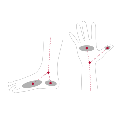
8-Point Tactile
Electrode System
InBody pakt contactweerstand aan door het strategisch plaatsen van elektroden om de impedantie in het lichaam nauwkeurig te meten.
Wanneer de impedantie wordt gemeten met behulp van elektroden, treedt contactweerstand op.
InBody pakt contactweerstand aan door het strategisch plaatsen van elektroden om de impedantie in het lichaam nauwkeurig te meten.
8-Point Tactile
Electrode System
InBody pakt contactweerstand aan door het strategisch plaatsen van elektroden om de impedantie in het lichaam nauwkeurig te meten.
8-puntige Elektrode Systeem
BIA Tech Problem
InBody Solution
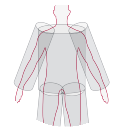
Direct Segmental
Measurements
Wanneer de impedantie wordt gemeten met behulp van elektroden, treedt contactweerstand op.
InBody pakt contactweerstand aan door het strategisch plaatsen van elektroden om de impedantie in het lichaam nauwkeurig te meten.
Geen empirische schattingen op meetwaarden
Direct Segmental Multi-frequency Bioelectrical Impedance Analysis
BIA Tech Problem
However, the torso of the body needs to be measured separately because even an error of 1-2 ohms in measurement can lead to substantial error in total body water measurements.
InBody Solution
InBody provides independent measurements for each cylinder to provide accurate measurements for the entire body.
Direct Segmental
Measurements
Geen empirische schattingen op meetwaarden
BIA Tech Problem
However, the torso of the body needs to be measured separately because even an error of 1-2 ohms in measurement can lead to substantial error in total body water measurements.
InBody Solution
InBody provides independent measurements for each cylinder to provide accurate measurements for the entire body.
Multiple
Frequencies
Wanneer de impedantie wordt gemeten met behulp van elektroden, treedt contactweerstand op.
InBody pakt contactweerstand aan door het strategisch plaatsen van elektroden om de impedantie in het lichaam nauwkeurig te meten.
Meerdere Frequenties
8-Point Tactile Electrode System with Thumb Electrodes
BIA Tech Problem
Since 50 kHz or lower frequencies barely pass through the cell membrane, accurate measurement of the impedance in the intracellular water was not possible.
The ability to measure accurate intracellular vs. extracellular water is important for those in nephrology or rehabilitation.
InBody Solution
The use of multiple frequencies make InBody devices accurate enough to be trusted for use in the medical field.
Multiple
Frequencies
Meerdere Frequenties
BIA Tech Problem
Since 50 kHz or lower frequencies barely pass through the cell membrane, accurate measurement of the impedance in the intracellular water was not possible.
The ability to measure accurate intracellular vs. extracellular water is important for those in nephrology or rehabilitation.
InBody Solution
The use of multiple frequencies make InBody devices accurate enough to be trusted for use in the medical field.

No
Estimations
Wanneer de impedantie wordt gemeten met behulp van elektroden, treedt contactweerstand op.
InBody pakt contactweerstand aan door het strategisch plaatsen van elektroden om de impedantie in het lichaam nauwkeurig te meten.
Geen empirische schattingen op meetwaarden
No Estimations or Empirical Equations
BIA Tech Problem
These empirical equations plugged data in such as age, gender, and ethnicity to calculate a user’s body composition instead of measuring an individual’s actual body composition.
InBody Solution
InBody measures your impedance independently, so your results are not affected by your age, ethnicity, or gender.
No
Estimations
Geen empirische schattingen op meetwaarden
BIA Tech Problem
These empirical equations plugged data in such as age, gender, and ethnicity to calculate a user’s body composition instead of measuring an individual’s actual body composition.
InBody Solution
InBody measures your impedance independently, so your results are not affected by your age, ethnicity, or gender.
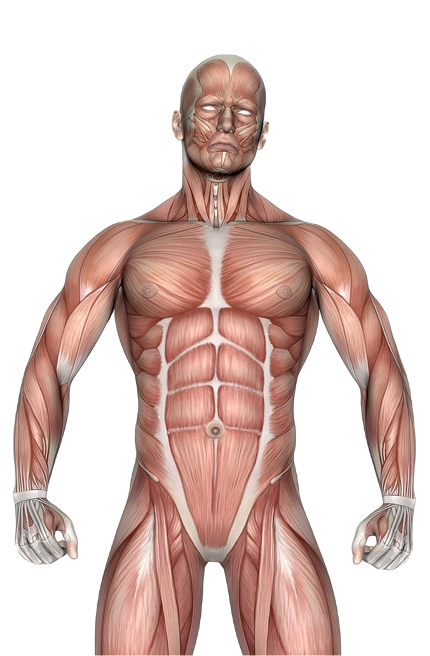
Muscle mass
3.14 kg
Muscle mass
3.20 kg
Visceral fat
55.2 cm²
Fat mass
1.20 kg
Fat mass
1.10 kg
High Correlation to
Gold Standard Methods
Welcher InBody ist der richtige für Sie?
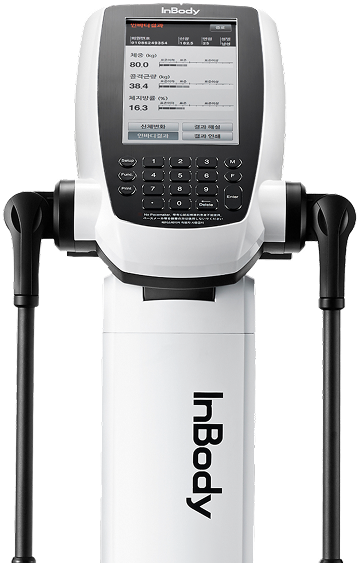


Contattaci
"*" indicates required fields